
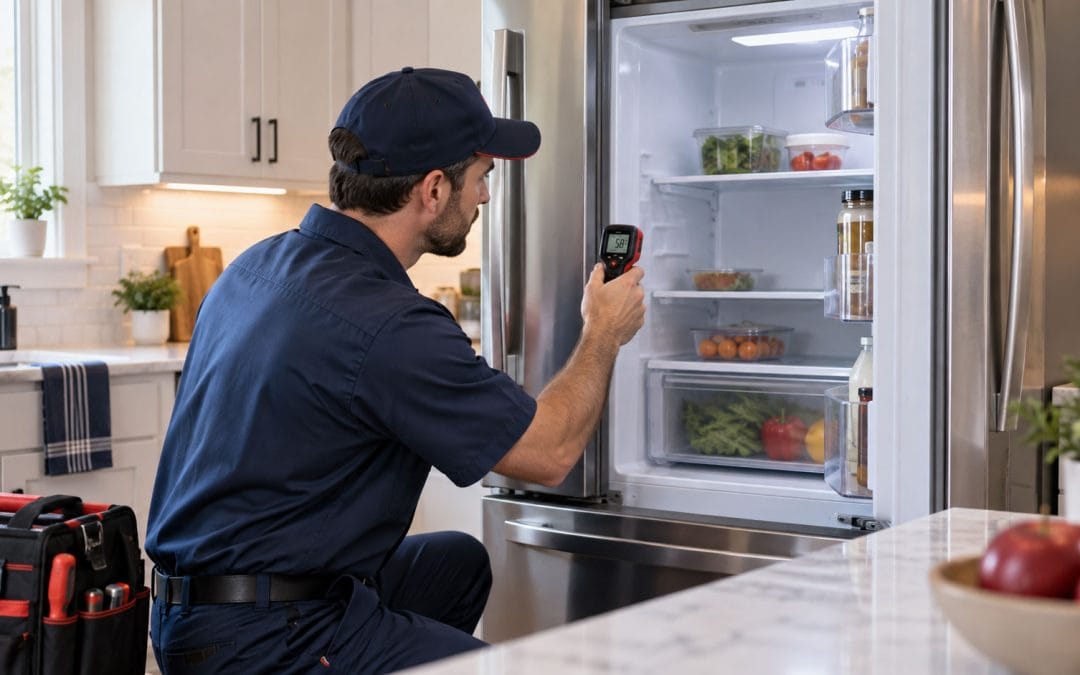
If your refrigerator is running but not keeping food cold, the problem may be something simple or it may require professional repair. Before scheduling service, there are a few things you can safely check yourself.
1. Check the Temperature Setting
Start by checking the refrigerator temperature setting. The refrigerator compartment should generally be around 37°F to 40°F. If the setting was accidentally changed, adjust it and give the refrigerator several hours to stabilize.
2. Make Sure the Door Is Closing Properly
A refrigerator door that does not seal completely can allow warm air inside and make it difficult for the appliance to maintain the correct temperature.
Check for food containers or shelves that may be preventing the door from closing. You can also inspect the door gasket for dirt, damage or areas that are not sealing properly.
3. Check for Blocked Air Vents
Cold air needs to circulate throughout the refrigerator. If food containers are blocking the internal air vents, some areas of the refrigerator may become warmer than others.
Try rearranging items so there is space around the vents and air can move freely through the refrigerator compartment.
4. Check the Condenser Area
Dust and debris can collect around the condenser coils or ventilation areas and reduce the refrigerator's ability to release heat.
If the condenser area is accessible, make sure it is not heavily covered with dust or blocked by objects. Always unplug the refrigerator before cleaning around electrical or mechanical components.
5. Listen for the Fans
Most refrigerators use fans to circulate cold air and help remove heat. If a fan is not operating correctly, the refrigerator may run without cooling properly.
You may notice unusual noises, no airflow from the vents or temperatures that vary significantly between the refrigerator and freezer compartments.
6. Look for Excessive Frost or Ice
A heavy buildup of frost inside the freezer can restrict airflow between the freezer and refrigerator compartments.
Excessive frost may indicate a door-seal problem or an issue with the refrigerator's defrost system. If frost quickly returns after being removed, professional diagnosis may be needed.
7. The Cooling System May Need Service
If the refrigerator has power, the settings are correct and airflow appears normal but the appliance still is not cooling, the problem may involve a thermostat, sensor, fan, compressor or another cooling-system component.
These issues usually require testing and diagnosis by an appliance repair technician.
When Should You Call for Refrigerator Repair?
Consider scheduling professional service if the refrigerator remains warm after checking the basic items above, temperatures continue to fluctuate, frost keeps returning, unusual noises develop or the appliance is running constantly without cooling properly.
A technician can inspect the refrigerator, identify the cause of the problem and explain the available repair options.
Need Refrigerator Repair?
Beltway Appliance Repair provides professional refrigerator and freezer repair throughout Northern Virginia, Washington, DC and nearby Maryland communities.