
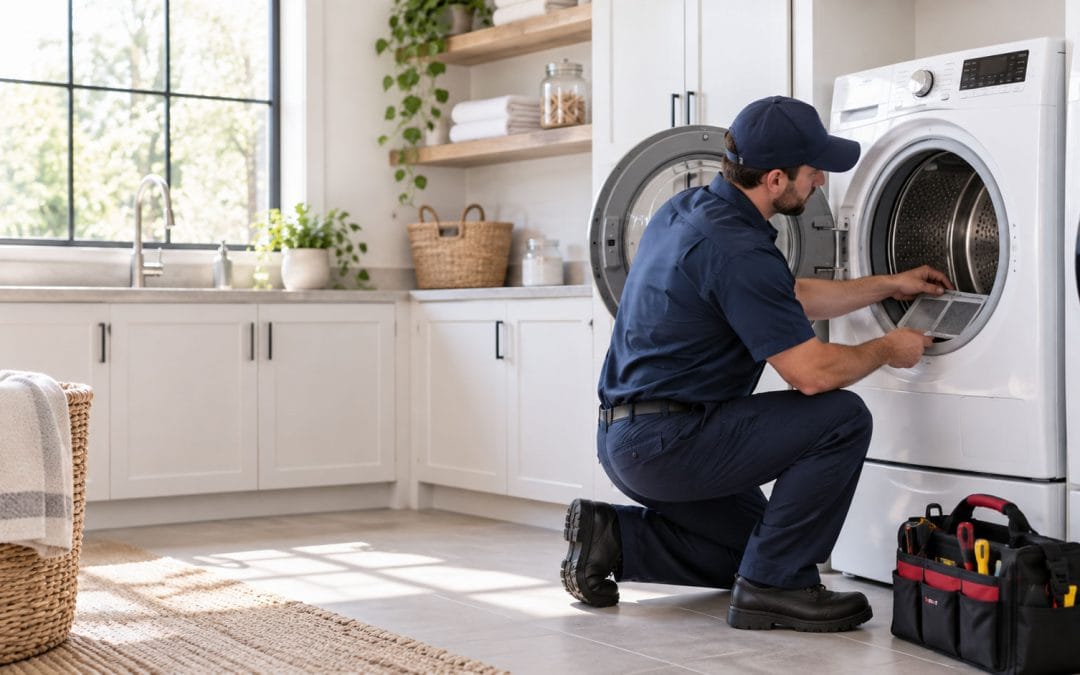
Major household appliances are built to last for years, but no appliance lasts forever. Understanding the typical lifespan of the equipment in your home can help you plan for repairs, maintenance and eventual replacement.
Refrigerators & Freezers
Many refrigerators and freezers can remain in service for around 10 to 15 years, depending on the brand, model, maintenance and how heavily the appliance is used.
Cooling problems, repeated repairs, excessive noise or difficulty maintaining temperature may become more common as the appliance ages.
Washers
Washing machines often last around 8 to 12 years. Regular use, load size, water conditions and maintenance can all affect how long a washer continues operating reliably.
Frequent drainage problems, unusual noises or repeated cycle failures may be signs that an older washer needs more attention.
Dryers
Dryers commonly remain in service for around 10 to 13 years. Keeping the lint filter and vent system clean can help support proper airflow and reduce unnecessary strain on the appliance.
Long drying times, repeated heating problems or unusual noises may become more common as components wear.
Dishwashers
Dishwashers often last around 8 to 12 years. Their lifespan can be affected by water quality, frequency of use and how well the filters and spray components are maintained.
Recurring leaks, poor cleaning performance or drainage problems may indicate that an older dishwasher needs repair or replacement consideration.
Ranges, Cooktops & Ovens
Cooking appliances can often remain in service for 10 to 15 years or longer, depending on the type of equipment and how it is maintained.
Heating problems, inaccurate temperatures, ignition issues or failing controls can occur as these appliances age.
Microwaves
Microwaves generally have a shorter lifespan than many larger appliances and may last around 7 to 10 years.
If an older microwave develops repeated heating problems, electrical issues or door-related problems, replacement may sometimes make more sense than repair.
What Affects Appliance Lifespan?
Appliance lifespan can vary significantly based on usage, installation, maintenance, brand, model and operating conditions.
Keeping appliances clean, avoiding overloading, addressing problems early and following manufacturer maintenance recommendations can help reduce unnecessary wear.
Repair or Replace?
An appliance reaching its typical lifespan does not automatically mean it needs to be replaced. Some older appliances continue operating reliably for years, while newer equipment can still develop repairable problems.
A professional diagnosis can help determine what is wrong and whether repair is practical based on the appliance's age, condition and the work required.
Need Appliance Service?
Beltway Appliance Repair provides professional appliance diagnosis and repair throughout Northern Virginia, Washington, DC and nearby Maryland communities.